
Thomson Reuters (TSE:TRI) Could Be A Buy For Its Upcoming Dividend
Some investors rely on dividends for growing their wealth, and if you're one of those dividend sleuths, you might be intrigued to know that Thomson Reuters Corporation (TSE:TRI) is about to go ex-dividend in just three days. The ex-dividend date is one business day before the record date, which is the cut-off date for shareholders to be present on the company's books to be eligible for a dividend payment. It is important to be aware of the ex-dividend date because any trade on the stock needs to have been settled on or before the record date. This means that investors who purchase Thomson Reuters' shares on or after the 20th of February will not receive the dividend, which will be paid on the 8th of March.
The company's upcoming dividend is US$0.54 a share, following on from the last 12 months, when the company distributed a total of US$2.16 per share to shareholders. Based on the last year's worth of payments, Thomson Reuters has a trailing yield of 1.4% on the current stock price of CA$214.14. If you buy this business for its dividend, you should have an idea of whether Thomson Reuters's dividend is reliable and sustainable. So we need to investigate whether Thomson Reuters can afford its dividend, and if the dividend could grow.
View our latest analysis for Thomson Reuters
Dividends are typically paid out of company income, so if a company pays out more than it earned, its dividend is usually at a higher risk of being cut. Fortunately Thomson Reuters's payout ratio is modest, at just 34% of profit. Yet cash flow is typically more important than profit for assessing dividend sustainability, so we should always check if the company generated enough cash to afford its dividend. Fortunately, it paid out only 50% of its free cash flow in the past year.
It's positive to see that Thomson Reuters's dividend is covered by both profits and cash flow, since this is generally a sign that the dividend is sustainable, and a lower payout ratio usually suggests a greater margin of safety before the dividend gets cut.
Click here to see the company's payout ratio, plus analyst estimates of its future dividends.
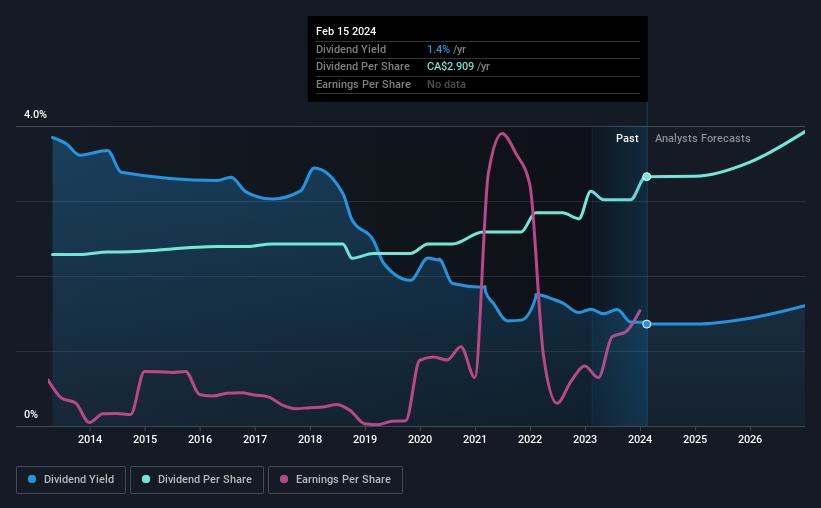
Have Earnings And Dividends Been Growing?
Businesses with strong growth prospects usually make the best dividend payers, because it's easier to grow dividends when earnings per share are improving. Investors love dividends, so if earnings fall and the dividend is reduced, expect a stock to be sold off heavily at the same time. It's encouraging to see Thomson Reuters has grown its earnings rapidly, up 121% a year for the past five years. Thomson Reuters is paying out less than half its earnings and cash flow, while simultaneously growing earnings per share at a rapid clip. This is a very favourable combination that can often lead to the dividend multiplying over the long term, if earnings grow and the company pays out a higher percentage of its earnings.