
Institutional investors are Coca-Cola Consolidated, Inc.'s (NASDAQ:COKE) biggest bettors and were rewarded after last week's US$466m market cap gain
Key Insights
-
Given the large stake in the stock by institutions, Coca-Cola Consolidated's stock price might be vulnerable to their trading decisions
-
50% of the business is held by the top 18 shareholders
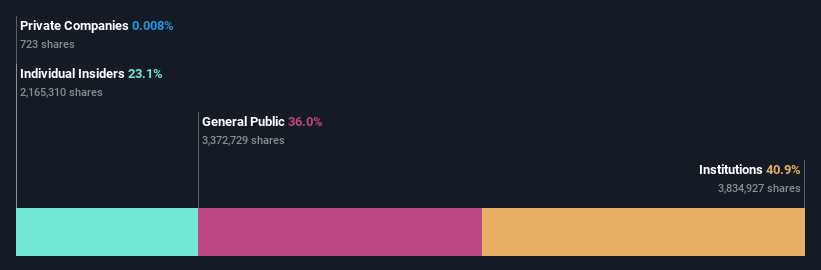
To get a sense of who is truly in control of Coca-Cola Consolidated, Inc. (NASDAQ:COKE), it is important to understand the ownership structure of the business. We can see that institutions own the lion's share in the company with 41% ownership. That is, the group stands to benefit the most if the stock rises (or lose the most if there is a downturn).
Last week’s 6.2% gain means that institutional investors were on the positive end of the spectrum even as the company has shown strong longer-term trends. The one-year return on investment is currently 73% and last week's gain would have been more than welcomed.
Let's take a closer look to see what the different types of shareholders can tell us about Coca-Cola Consolidated.
See our latest analysis for Coca-Cola Consolidated
What Does The Institutional Ownership Tell Us About Coca-Cola Consolidated?
Many institutions measure their performance against an index that approximates the local market. So they usually pay more attention to companies that are included in major indices.
As you can see, institutional investors have a fair amount of stake in Coca-Cola Consolidated. This suggests some credibility amongst professional investors. But we can't rely on that fact alone since institutions make bad investments sometimes, just like everyone does. If multiple institutions change their view on a stock at the same time, you could see the share price drop fast. It's therefore worth looking at Coca-Cola Consolidated's earnings history below. Of course, the future is what really matters.

We note that hedge funds don't have a meaningful investment in Coca-Cola Consolidated. With a 11% stake, CEO J. Harrison is the largest shareholder. Meanwhile, the second and third largest shareholders, hold 6.4% and 6.2%, of the shares outstanding, respectively.
Looking at the shareholder registry, we can see that 50% of the ownership is controlled by the top 18 shareholders, meaning that no single shareholder has a majority interest in the ownership.
While studying institutional ownership for a company can add value to your research, it is also a good practice to research analyst recommendations to get a deeper understand of a stock's expected performance. As far as we can tell there isn't analyst coverage of the company, so it is probably flying under the radar.